A park that fills its site with high-capacity thrill rides will move crowds efficiently and leave families with nothing to do together. A park that fills it with gentle family attractions will feel calm and struggle to absorb a busy weekend. Revenue improves when the two are balanced deliberately.
This article explains how to build a ride mix that serves both throughput and dwell time, and how to test whether the balance is right before the equipment is ordered. It follows a how much does it cost to build an amusement park budget, where each ride carries its own foundations and operating cost.
Two Different Jobs
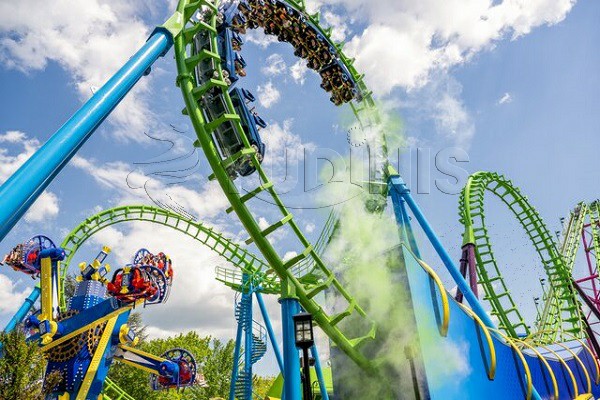
High-capacity rides do a throughput job. They absorb queues, keep the park moving and allow a large number of visitors to ride within a short window. They are essential on busy days.
Family attractions do a dwell-time job. They let parents and young children ride together, slow the pace and keep groups on site for longer. They are essential for spending and repeat visits.
A park needs both, and the right ratio depends on how visitors arrive: in family groups, in school groups, or as adults in pairs.
Match the Mix to the Visitor Profile
Start from who actually visits. A park serving mostly families with children under ten needs more gentle attractions and fewer extreme rides. A park near a city centre with a teenage audience needs the opposite.
If the audience is mixed, the mix should be mixed too, with a clear anchor attraction that defines the park and a spread of supporting rides that serve the rest of the group.
Watch the Queue, Not Just the Capacity
High-capacity rides reduce queues; low-capacity family rides can create them. A small family ride that loads slowly can become the bottleneck even when the park’s total capacity looks adequate.
Model the queue at peak, not the average. A park that is comfortable on a normal Saturday can still be unpleasant on a public holiday.
Balance Revenue per Visitor and Revenue per Ride
An admission park earns the same from each visitor regardless of which rides they use, so the mix should maximise satisfaction and dwell time. A pay-per-ride park earns per ride, so the mix should favour attractions that visitors will pay for individually.
Mixing the two models is possible, but it needs a clear rule: which attractions are included in admission and which are ticketed separately.
Use One Anchor and Several Supporters
The anchor attraction gives the park its identity and its marketing. The supporting rides should then be chosen for coverage: different ages, different intensities, different weather conditions.
Buyers who want a structured amusement park ride mix review should map each candidate ride against the age groups it serves and the queue it creates, then remove duplicates that occupy space without adding coverage.
Plan for the Weather and the Season
Outdoor thrill rides close in wind and rain. Covered family attractions keep trading. A mix that includes both protects revenue on poor days and keeps the park usable all year.
This is also where lighting and covered areas matter. An LED lighting scheme can extend the trading day without changing the ride mix at all.
Test the Mix Before Buying
Before committing, run a simple test: at peak, would the ride list keep queues moving? At quiet times, would a family find enough to do for three hours? If either answer is no, the mix needs adjusting.
A ride mix planning from Dinis proposal can price both the high-capacity and family elements together, and a shortlist of high capacity family rides for sale can be assessed against the same criteria.
Dinis supplies both thrill and family attractions and works as an amusement park rides manufacturer, providing capacity and footprint data for each model so the balance can be modelled before purchase. Reference: https://www.kidsparksolutions.com/how-much-does-it-cost-to-build-an-amusement-park/