A trackless train can move guests across a large park, but its value depends on where it stops. Too few stations and the train becomes a sightseeing loop that drops guests far from the attractions they wanted; too many and each journey slows down until nobody uses it as transport. This guide explains how to decide the right number of trackless train passenger stops for a large amusement park.
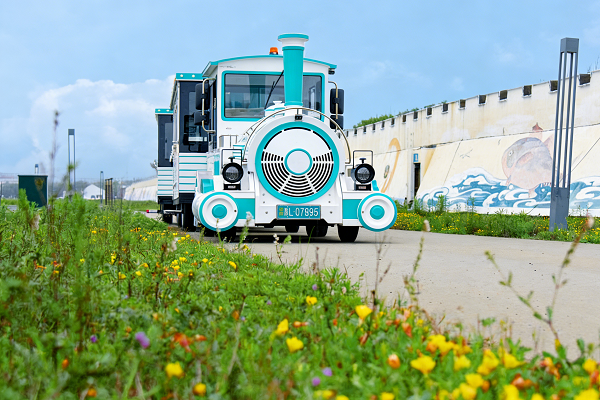
Start with Route Length and Journey Time
Measure the proposed loop and estimate driving time at a comfortable speed. On a typical large park route, a complete circuit should take between 12 and 20 minutes, which keeps the ride interesting without making it slow transport. Every stop adds standing, boarding, and accelerating time, so a route of ten minutes driving time can easily become twenty minutes with five stations. Decide first how long a full circle should take, then work backwards to the maximum number of stops.
Calculate Stops from Guest Attractions
List the destinations that genuinely need a station: main entrance, signature rides, water park, children’s area, food court, and the transport interchange at the far end of the park. Most large parks find that four to six stops serve the layout well. A station should exist only where a meaningful number of guests will board or leave; decorative stops with no nearby attraction slow the system without adding value.
Balance Station Dwell Time Against Capacity
Each stop costs thirty to sixty seconds under normal conditions and longer when families with strollers or wheelchairs board. If a 60-seat train stops six times, the day’s capacity drops noticeably compared with the same train on three stops. Track the numbers: hourly capacity equals seats multiplied by departures, and departures fall as stops increase. Where demand is high, prefer fewer, larger stations over many small ones, and consider express and all-stops services on the same route.
Design Boarding Areas and Access
Every station needs level boarding, shelter, seating, clear signage, and space for a queue that does not block the main path. Plan for accessibility with ramps or low-floor platforms, and keep the drop-off adjacent to the attraction entrance so the walk is short. Stations also need lighting for evening operation and, in wet climates, a roof that protects both guests and the boarding area. If the park needs a formal interchange point where routes meet, mark it clearly as the main hub to help guests orient themselves.
Plan for Peak Seasons and Events
Peak days change the maths. More guests mean fuller trains, longer dwell times, and queues that spill between stations. Design for the busiest weekend of the year, and consider additional trains running a short shuttle route between the two most popular zones during events. A modern electric trackless train for parks also simplifies stop planning, because charging can be scheduled at the main hub while the vehicle is stationary. A practical plan for train station planning for parks includes flexible stopping patterns, extra staff at the busiest stations, and clear communication when a station is temporarily closed.
Maintenance and Driver Breaks
Stations are also operational assets: they provide a safe place for driver changes, inspections, cleaning, and charging or refuelling. Place at least one station near the maintenance area or depot so vehicles can be swapped quickly if a problem occurs. Plan driver rotations around the timetable, because a comfortable driver maintains a better pace and improves the guest experience.
The right number of stops is usually four to six in a large park: enough to serve the main zones, few enough to keep journeys quick. Work with an experienced Dinis park train manufacturer that can model journey times and capacity for your route, and study how a modern train station is planned for accessibility and flow. To review train models and layout options, visit https://www.dinistrains.com/trackless-train-rides/ and share your park plan.
Leave a Reply