The best two-level carousel is not automatically the model with the most seats. Capacity, footprint, height, visitor flow, venue type and investment scope must be considered together. A practical 38-to-92-seat double decker carousel selection starts with measured site conditions and an estimate of realistic demand during normal and peak operating periods.
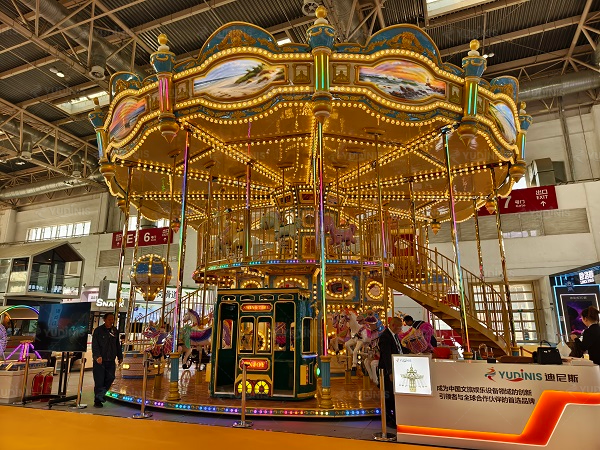
When Is the 38-Seat Model Appropriate?
The supplier describes the 38-seat version as a portable double-layer carousel. Its published specifications show an 11-meter diameter, 11.5-meter height and 11 kW power. The seating is distributed between two levels, and the mobile-base concept is presented for operators who expect dismantling or relocation.
This model can suit a seasonal fair, mobile carnival or outdoor venue that wants a two-storey visual effect without choosing the largest structure. However, “portable” does not remove the need to confirm assembly procedures, ground preparation, power supply, fencing and local inspection requirements. The operator should also check whether the available transport and lifting resources match the proposed relocation plan.
Why Is the 48-Seat Carousel a Mid-Range Option?
The 48-seat model is listed with a 14.5-meter diameter, 11.5-meter height, 8 kW power and a rotation speed of 3 rpm. The page states that a venue should have at least about 170 square meters for the equipment area. Buyers should treat this as an early reference and then add queue, entrance, exit, control and maintenance space.
With ten more seats than the 38-seat model, it may suit a permanent family park, shopping center or larger outdoor venue with steady traffic. It can provide a more spacious lower level and a stronger landmark appearance while remaining below the dimensions of the 68- and 92-seat configurations.
What Changes with the 68-Seat Model?
The dedicated 68-passenger double-storey carousel specifications list a 16-meter diameter including the fence, 14.5-meter height, 18 kW power and 3.25 rpm speed. The page positions the model for family parks, shopping centers and similar venues and presents European and ocean themes.
This configuration can be considered where management expects higher family traffic and wants a visually prominent ride. The larger diameter and height require more careful coordination with circulation, roof clearance for indoor applications, foundations or base preparation, delivery access and lifting equipment.
When Does the 92-Seat Model Make Sense?
The target page lists the 92-seat version with an indicative area of 18 × 22 meters including the fence, a height of 17.8 meters and 30 kW power. It is a destination-scale choice compared with the smaller models. The larger structure may fit a high-traffic theme park, scenic destination or municipal project seeking a major centerpiece.
The equipment boundary alone is already substantial, and the complete operating zone will be larger. Buyers need space for passenger staging, exits, operator facilities, maintenance access and emergency movement. Indoor buyers must verify floor loading, clear height and component access before assuming the model can be installed inside an existing building.
How Should Capacity Be Matched to Demand?
Nominal seats do not equal realized hourly revenue. Dispatch time, loading discipline, occupancy, ride duration, accessibility procedures and downtime influence actual throughput. The purpose of capacity planning is to match available capacity with demand while avoiding both underused assets and unmet customer needs.
Management should estimate weekday, weekend and holiday traffic separately. A 38-seat carousel may be efficient for variable or mobile operations, while 48 seats can suit a balanced permanent venue. The 68- and 92-seat options become more defensible when demand, site area and destination positioning support their larger scale.
What Should Be Sent to the Manufacturer?
An inquiry should include the country, venue type, available dimensions, indoor or outdoor location, expected visitor volume, preferred theme, power supply and delivery schedule. Buyers should request a drawing that separates the equipment boundary from the complete operating area. The DINIS carousel manufacturing and project team can then compare commercial two-level carousel capacity options against the actual site.
In conclusion, 38 seats favors portability and a smaller structure, 48 seats offers a mid-range permanent solution, 68 seats supports larger family traffic, and 92 seats suits a landmark project with sufficient land and infrastructure. Final selection should follow a site-specific technical and commercial review. Product options are available at https://www.carouselmanufacturer.com/product/double-decker-carousel-ride-for-sale/
Leave a Reply