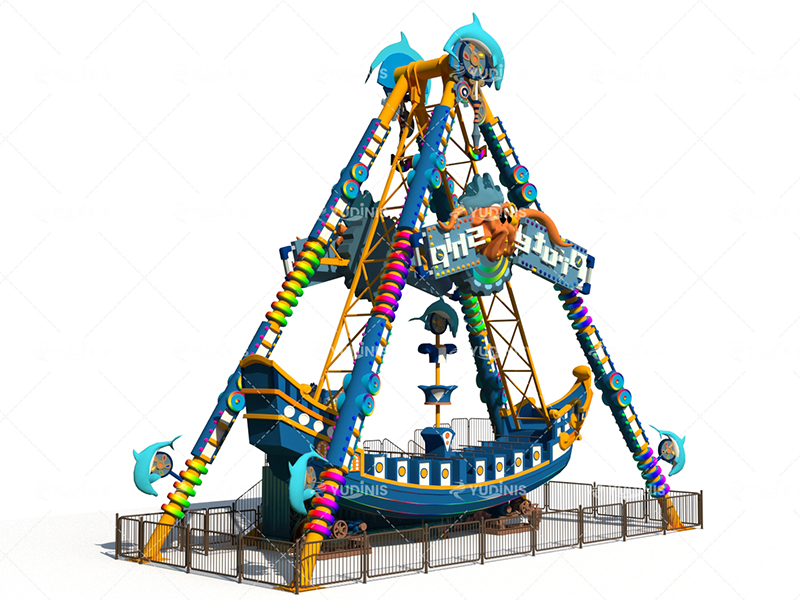
A pirate ship can be more than a standard thrill ride. With the right colors, marine decorations, lighting, branding and capacity, it can become part of the visual identity of an entire themed zone.
DINIS currently offers 24-, 32-, 36/40- and 70-passenger ocean-themed swing ship configurations and lists LED lighting, logo integration and marine-style decorations among the available customization directions.
A practical ocean-themed pirate ship customization plan should therefore begin with the park theme and target visitors instead of simply changing the color of a standard pirate ship.
How Should You Define the Ocean Theme First?
Start by deciding what type of marine atmosphere the attraction should create.
A children’s ocean zone may use brighter blues, friendly sea creatures and more playful decorative elements. A resort or coastal attraction may prefer a cleaner nautical appearance, while a fantasy park can combine pirate elements with imaginative creatures, waves and illuminated decorations.
The important point is visual consistency. The hull, surrounding decorative panels, entrance treatment and nearby landscape should look as though they belong to the same themed environment.
The related 24-seat pirate ship theme-design reference shows how classic, ocean and fantasy-style concepts can be applied to the same basic ride category. The page specifically describes ocean-theme elements such as blue tones, waves and marine animals.
Which Parts of the Pirate Ship Can Be Customized?
Customization can extend beyond the hull paint.
The current target page states that LED lighting, the park’s logo or name and sea-themed graphics can be incorporated into the ride design. This means the operator can coordinate several visual layers rather than relying on one decorative feature.
Typical design discussions can include the hull color, marine graphics, decorative animals, lighting arrangement, logo position and the appearance of surrounding panels.
The objective should be to create one recognizable attraction rather than adding unrelated decorative components.
How Should Materials Affect the Visual Design?
Theme design still needs to work with the materials used in the actual equipment.
The target page lists steel, FRP and LED elements, while the 24-seat product page identifies Q235B steel, FRP, stainless steel and aluminum alloy among its materials.
FRP and fiberglass are particularly relevant to decorative amusement-ride elements because complex shapes can be formed for themed exterior components.
From a purchasing perspective, however, decorative design should never replace the technical requirements of the selected ride structure. Final materials, dimensions and structural details should follow the confirmed product specification.
Should Lighting and Logo Design Be Planned Together?
Yes. Lighting and branding are most effective when they are integrated into the original concept.
Instead of adding a logo after the hull design is completed, decide early where the park name or brand mark should appear and how visible it should be from the main visitor route.
Lighting should also follow the shape of the ride. The target product page specifically allows customized lighting effects as part of the ocean-style design.
A custom sea-themed swing ship design package can therefore coordinate the daytime appearance with the nighttime lighting effect rather than treating them as two separate designs.
Does Capacity Affect the Custom Design?
Yes. The same theme may need to be adapted to different equipment sizes.
The target product currently lists five passenger-capacity references across 24, 32, 36, 40 and 70 passengers, with different equipment heights and footprints. A decorative concept designed for a compact 24-seat model cannot simply be enlarged without checking proportions.
Large models provide more visible surface area for graphics and lighting, while smaller configurations may need simpler design elements that remain readable from a distance.
Before approving artwork, confirm the exact capacity and equipment configuration first.
What Should You Send the Manufacturer for Customization?
Prepare the park theme, preferred colors, logo file, reference images, available site area, desired passenger capacity and the visual style of neighboring attractions.
If the ride will be part of an ocean, pirate or coastal-themed zone, also provide a layout showing how visitors approach the attraction. This helps the design team identify the most visible sides of the equipment.
The DINIS theme park customization team can then discuss the visual concept together with the confirmed ride configuration instead of designing only from a verbal description.
The final appearance should be approved together with the technical drawings and project-specific requirements.
More information about the ocean-themed model is available at https://themeparkprojects.com/ocean-themed-swing-ship-ride/
Leave a Reply