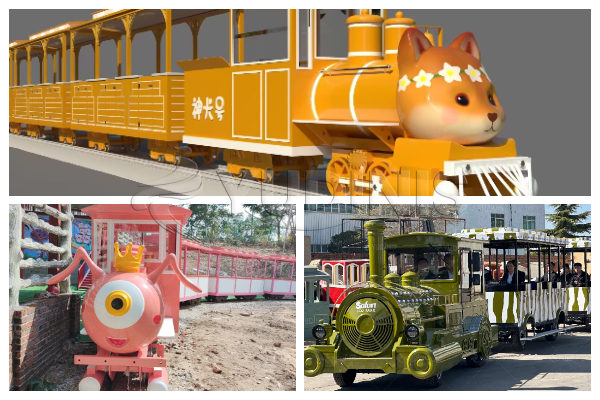
Tourist trains are the quiet workhorses of a large zoo or safari park. They move visitors between zones, carry guests who cannot walk the full circuit, and give families a reason to stay an extra hour. Yet most disappointing train services fail for one simple reason: the stations were treated as stops rather than as destinations. This guide looks at where stations should sit inside a large animal park, what that decision means for zoo train rides for sale projects, and how to plan boarding points that stay busy all day.
Start With the Walking Circuit, Not the Track
The train has to solve a problem that already exists on the map. Mark the longest walking distance between two animal zones, the steepest slope, and the point where families with small children usually turn back. A station placed at each end of that problem becomes useful the day the service opens; a station placed wherever the track was easiest to lay serves the engineer rather than the guest, and guests will quietly ignore it.
Place Stations at Zone Edges, Not Zone Centres
A station in the middle of an exhibit forces every passenger to walk through the same themed area and puts a queuing crowd in the middle of the habitat viewing zone. Edge positions keep the animal sight lines clear and let the platform face a service road, which makes cleaning, catering, wheelchair access and emergency evacuation far easier to manage. Review the available amusement park train rides for sale and note the turning radius and platform length each model requires before the locations are fixed.
Design Boarding for Wheelchairs and Families
Accessible boarding is much easier to design into a new platform than to add afterwards. Aim for a raised platform with a gentle ramp, a level boarding area at least two metres deep, and shade over the waiting zone. Families with pushchairs need space to park beside the platform without blocking the walkway, and the loading point should be visible from the main path so that visitors can watch the train arrive and join the queue without asking a member of staff. These details decide whether the ride still runs at capacity in the middle of a hot afternoon.
Plan the Service Cycle Between Stations
Station spacing controls the timetable. If the stops are too close together the train spends its day braking and boarding, and hourly throughput collapses; if they are too far apart guests abandon the circuit and walk. Measure the realistic cycle, from departing and travelling to arriving, unloading, loading and departing again, and confirm that the round trip fits inside the patience of a family with small children. A trackless design is more flexible on awkward routes, and the general principles of trackless train design are worth reviewing if your park has narrow paths or tunnels.
Integrate Stations With Food, Shops and Toilets
The best stations are commercial opportunities as well as transport. A platform beside the main restaurant area turns a mid-morning train ride into a lunch stop, and a stop near the exit shop captures guests on their way out of the park. Busy interchange points deserve the same care as attractions: paving, seating, bins, clear signage and an unobstructed line of sight along the platform. Decide early whether the park will have one large terminal station or several smaller stops, because that single decision changes the fleet size and the staffing you need in peak season.
Confirm Fleet Size and the Supplier’s Programme
Once the locations are fixed, the commercial questions are straightforward: how many tourist train for zoo and safari park units are required to keep the interval between trains shorter than the walking time, what the daily operating hours mean for battery or diesel capacity, and how the park will service the fleet without interrupting the service. Ask the supplier for station drawings, the minimum curve radius and a commissioning plan as well as the vehicle specification. Operators comparing models usually start from a supplier’s full range, such as the train rides offered by Dinis Trains manufacturer, and then shortlist by route and capacity.
Station planning is the difference between a train ride that guests use as transport and one they treat as an attraction in its own right. Solve the walking circuit, place stops at zone edges, design for accessibility and realistic service cycles, and connect the platforms to the places where guests already spend money. To compare trains, stations and delivery programmes, review the models listed at https://www.dinistrains.com/zoo-train-rides-for-sale/.
Leave a Reply