Every flying chair ride has a fixed cost per cycle: the time guests spend boarding, the time the ride is in motion and the time it takes to clear the platform. Operators can influence all three, and the gains usually come from procedure rather than from hardware. This guide explains how to shorten flying chair ride cycle time without making the ride feel rushed.
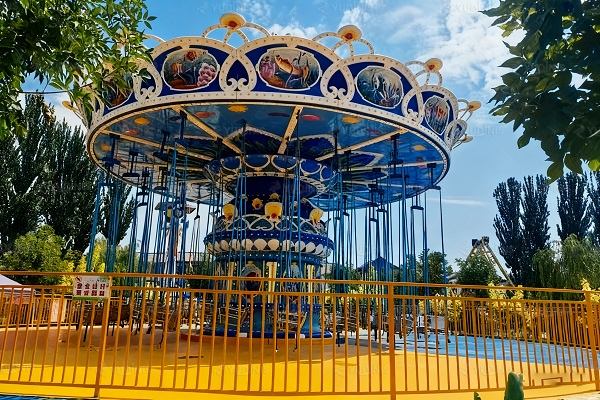
Measure the Cycle Before Changing It
Record the duration of each phase across a busy day: gate opening, boarding, restraint checks, the ride programme and unloading. The data usually shows that motion is a small part of the total and that boarding is where the minutes disappear. Without that measurement, operators tend to shorten the ride itself, which reduces the experience while leaving the real bottleneck untouched.
Organise Boarding as a Choreographed Sequence
Assign each attendant a fixed zone and a fixed task, then rehearse the sequence until it becomes routine. One person checks the left side of the platform, another checks the right, and a third controls the gate and counts seats. Clear markings on the floor show guests where to stand and which chair to take, which removes the hesitation that slows every load.
Fix the Gate and Queue Interface
The entrance gate should release guests in a controlled batch, not in a crowd. A holding area sized to one load keeps the platform clear while the previous group leaves, and a separate exit prevents two streams from meeting. Operators who improve flying chair ride throughput this way usually gain more capacity than a change to the ride programme would deliver.
Use the Ride Programme Deliberately
Not every cycle needs the same duration. A slightly shorter programme at peak times, followed by a longer one when the queue is short, keeps the attraction efficient without disappointing guests. Publish the ride duration at the entrance, keep it consistent within each period and make sure the operator announces any change, so the experience still feels predictable.
Reduce Unloading Time
Unloading is often overlooked. Guests pause to take photographs, collect bags and help children down, all of which hold the next load. A staff member at the exit can gently keep the flow moving, while a signed photo point outside the ride gives guests a place to stop without blocking the platform. Reviewing wave swinger ride models shows how platform layout and exit position differ between designs and how much they affect clearing time.
Balance Speed With Comfort and Safety
Faster cycles must never reduce the time available for restraint checks. The safe sequence is fixed; the variable parts are staffing, layout and guest preparation. Reference material on ride cycle design describes how attractions balance throughput with the physical limits of loading and unloading, and that balance is what keeps a shortened cycle both profitable and comfortable.
Cycle time improves when the whole process is designed rather than when the ride is simply sped up. Measure each phase, choreograph boarding, fix the gate and queue interface, use the ride programme deliberately, speed up unloading and protect the restraint check. Operators can review the range from Top Ride Sale swing chair rides and start from the product page at https://www.topridesale.com/flying-chair-ride/.
Leave a Reply